

When the power goes out in the middle of January and the temperature outside is twelve degrees, the question of what your home battery is actually doing becomes a lot less theoretical.
Most homeowners who look into battery storage have some version of backup power in mind. But there’s a significant gap between what people imagine a home battery does during an outage and what it actually does. That gap often leads to either oversizing out of anxiety or undersizing because the sales conversation glossed over the details. This post is about closing that gap.
What Happens the Moment the Grid Goes Down
A home battery system with a proper backup configuration does something that surprises a lot of people when they first experience it: nothing happens. The lights stay on. The refrigerator keeps running. The furnace blower keeps circulating air. There’s no interruption, no flicker, no moment of darkness.
That seamless transition is called automatic transfer switching, and it’s one of the things that makes a battery genuinely different from a portable generator. The system detects the loss of grid power in milliseconds and switches the home onto battery power without any action from the homeowner. If the transition is fast enough, you might not even know the outage started.
This automatic switchover requires proper installation. Not every battery configuration includes whole-home backup. Some are wired to specific circuits only, which means some parts of the house stay live during an outage and others don’t, this is completely up to you when it is installed and is an important distinction to understand before you buy.
What the Battery Is Actually Powering
This is where it gets specific, and where a lot of assumptions break down.
A home battery is not a magic box that keeps everything running indefinitely. It’s a finite energy reserve, and what that reserve can support depends entirely on what’s drawing from it.
A 10 to 13.5 kilowatt-hour battery, which is the most common size for a single unit, carries roughly the same energy as 10,000 watts running for an hour. The way that translates to real usage looks something like this:
- A refrigerator running continuously draws about 100 to 200 watts
- A furnace blower motor draws roughly 300 to 600 watts when running
- LED lighting throughout the house might add 100 to 200 watts
- Phone charging, a router, and a few other small devices add another 50 to 100 watts
That typical essential load for a gas-heated Minnesota home adds up to somewhere between 600 and 1,000 watts continuously, with occasional spikes. At that draw, a 10 kWh battery powers those loads for roughly 10 to 15 hours under real world conditions.
Where the math changes dramatically is when larger loads come into play. A central air conditioner during a summer outage draws 3,000 to 5,000 watts when it cycles on. An electric water heater draws 4,000 to 5,000 watts. A heat pump in Minnesota winter heating mode draws 3,000 to 5,000 watts and runs frequently. Any one of those loads can drain a single battery in a matter of hours.
The Minnesota Heating Question
This is the most consequential variable for homeowners in the Twin Cities and surrounding areas.
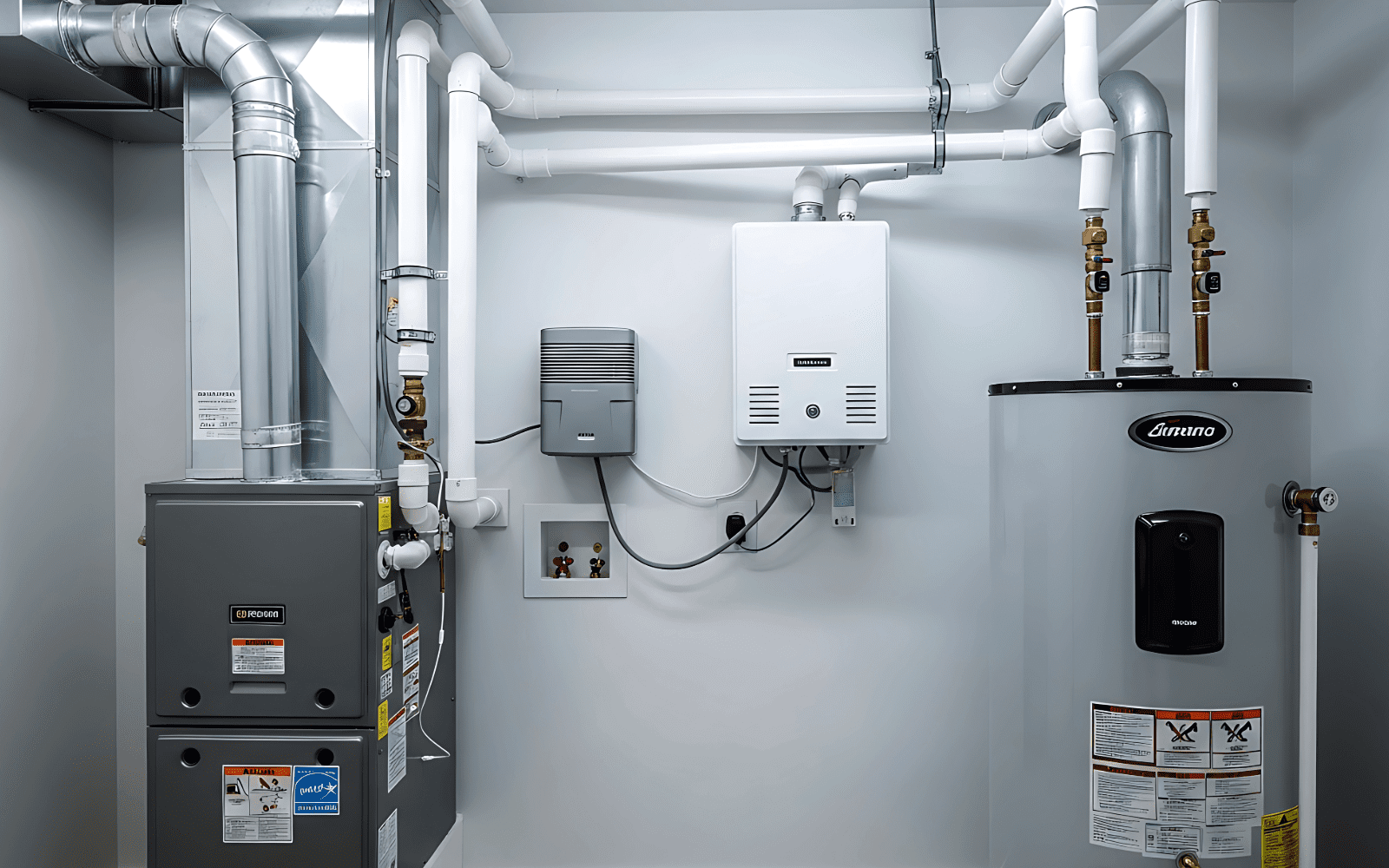
If your home heats with a natural gas furnace, the battery’s job during an outage is manageable. The furnace itself runs on gas. The battery only needs to power the blower motor, the controls, and the igniter, which together draw a few hundred watts. A single battery handles that load for a long time.
If your home heats with a heat pump or electric resistance baseboards, the picture changes significantly. The heating system itself becomes the dominant load on the battery. A heat pump drawing 4,000 watts continuously through a January night will exhaust a 13.5 kWh battery in three hours or less. That’s not a flaw in the product. It’s a physics based constraint in the design that requires honest sizing from the start.
Homes with electric heating that want reliable winter outage protection need either a significantly larger battery bank, typically two or more units, or a plan for managing the heating load during an outage, such as supplementing with a backup heat source like a fireplace. insert.
Solar Recharging Changes the Duration Equation
A battery by itself is a fixed energy reserve. A battery paired with solar is something different. During an outage, if the sun is out and the solar system is still producing power, the battery can recharge while it’s also supplying the home. In the right conditions, this combination can extend backup coverage indefinitely.
The practical implications of this are meaningful for Minnesota homes. A spring or fall storm that knocks out power for two or three days is actually a reasonable scenario for a solar-plus-battery system to handle, because solar production is reasonably strong during those seasons and the loads are moderate. A January ice storm is a harder case, because solar production is at its seasonal low and heating loads are at their seasonal high.
This is why the honest answer to “how long will my battery last during a power outage” is always: it depends. It depends on your load requirements, the size of your battery storage system, your solar production that day, and how long the outage lasts.
What the Battery Cannot Do
A few things worth naming directly:
A home battery cannot run a central air conditioner for a meaningful duration on its own. The math doesn’t work unless you have multiple batteries and solar recharging. An outage in late July with the AC running will drain a single battery quickly. Minisplit systems and heat pumps are starting to provide some better options, it would be worth it to keep an eye on this space.
A home battery cannot run an electric stove or oven for more than a short time. These are high-draw appliances that were not designed with backup operation in mind. Most homeowners with backup systems learn to use a gas grill or a single-burner propane camp stove for cooking during extended outages.
A home battery is also not a substitute for a generator in every scenario. Generators can run indefinitely as long as they have fuel. A battery with solar recharging can approach that capability in favorable conditions, but in a deep winter outage with limited solar, a generator’s ability to run continuously on fuel is a genuine advantage.
The Right Frame for Thinking About Backup
The most useful way to think about a home battery and back up power outage backup is not “will this keep my whole house running” but rather “what do I actually need running during an outage, for how long, and in what season.”
If the answer is: keep the essentials running for 12 to 24 hours through a typical storm, in a gas-heated home, with some likelihood of solar recharging, a single well-sized battery will handle that well.
If the answer is: keep a heat pump running through a three day January outage while also powering a sump pump and the refrigerator, that’s a two battery problem at minimum, and the sizing conversation needs to happen with someone who can actually calculate your home’s load profile.

Getting the sizing right is the whole game. An undersized battery that runs out at 3:00 am in January is not solving the problem it was purchased to solve. An oversized system that cost twice what was necessary to cover an actual two hour storm pattern is a different kind of mistake.
The right size system comes from a realistic assessment of what loads need to stay on, how long outages in your area actually tend to last, what season poses the biggest risk, and whether solar recharging is part of the picture.
Powerfully Green Solar helps homeowners across the Minneapolis–St. Paul area take control of their energy use through smarter home energy strategies, not just solar alone. If you want a clear picture of how a battery backup system would actually perform in your home before you make any decisions, schedule a free home energy assessment and get answers grounded in your specific situation.