
Minnesota, known as the Land of 10,000 Lakes is celebrated for its breathtaking landscapes and rich natural beauty. Preserving these landscapes is a deep rooted value that many who live here take pride in. But it takes more than appreciation, it takes stewardship, a commitment to caring & protecting the land for the generations to come.
Sustainability is a core value for a large majority of our state’s residents, and many actively choose the most environmentally friendly option when possible. Whether it is public transportation, paper over plastic, solar energy, or keeping our local parks and lakes clean. Taking care of Minnesota matters to Minnesotans!
Few people embody that commitment more than Andy Petran. A Minnesota native and small business owner, Andy built his farm, Twin Cities Berry Company, using sustainable farming practices and he continues to refine sustainable practices to help raise the bar on quality, and productivity. As he improves and perfects his methods he also supports other farmers across Minnesota and the country as they adopt sustainable farming strategies that protect the land for future generations.
Who is Andy & What is Twin Cities Berry Co.
Andy is a proud husband, father, and farmer who holds a Doctorate in Applied Plant Sciences. He founded his farming business, Twin Cities Berry Company in 2018 and specializes in horticultural production of strawberries. The quality of his fruit, and a lot of hard work, have made Andy a well known farmer at many Twin Cities farmer’s markets.
It has been 8 years since Andy began strawberry farming but he didn’t always plan to become a berry farmer. He started out pursuing a PhD and planned for a career in academia as a professor. He was drawn to academics by his love of research and the opportunity to share his knowledge. But as he approached the completion of his studies he couldn’t shake the idea of running his own farm. He wanted to conduct his own research and be able share his experiences with other farmers. In the end his passion for research and environmentally sustainable agricultural practices drove him to establish Twin Cities Berry Company.
The Farm Land
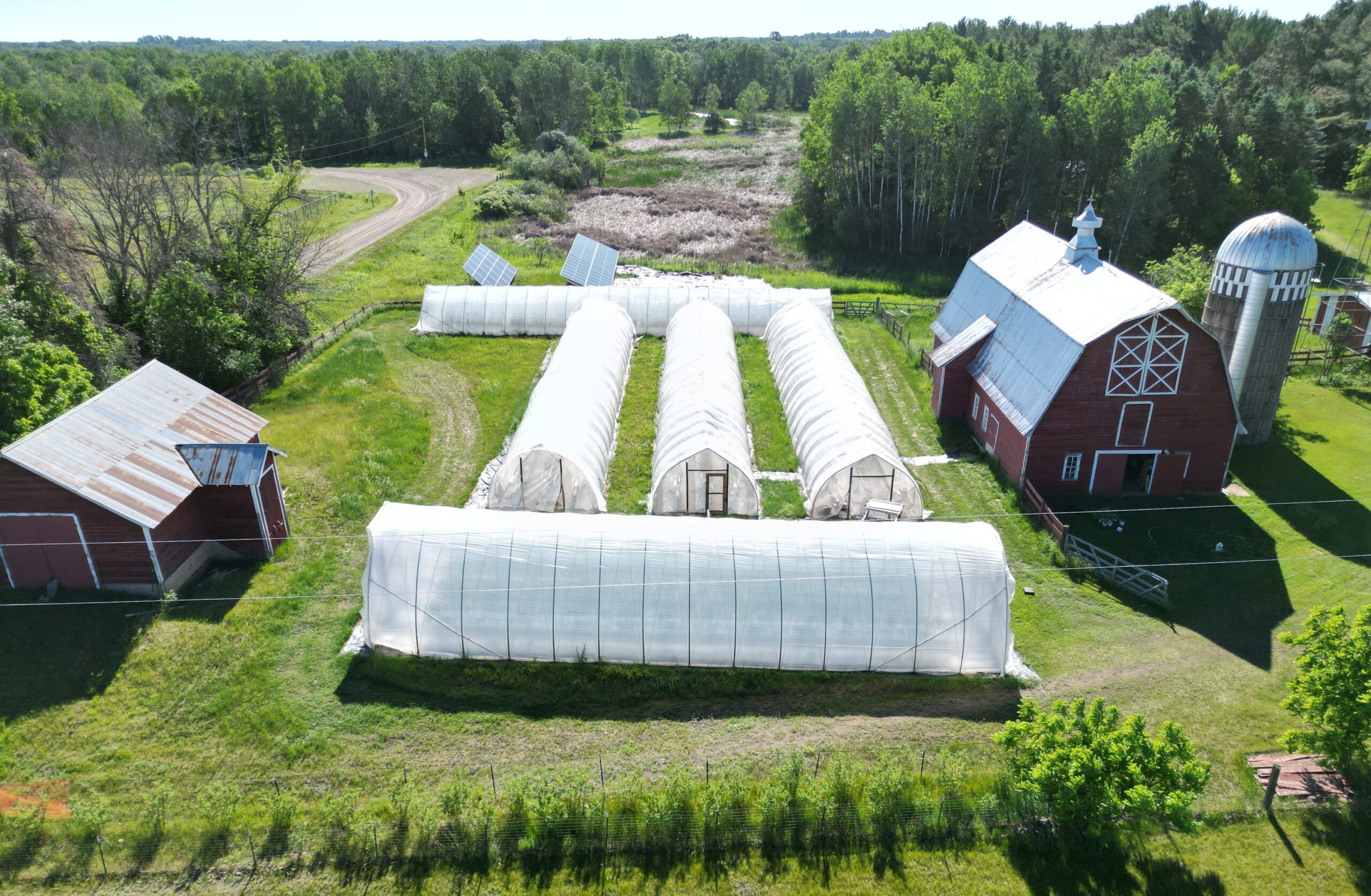
The first big hurdle for Andy was finding local farm land. For the first 5 years Andy rented land while searching for the right land to purchase. The search proved much more difficult and time consuming than he had anticipated. But, with help from state and federal farming programs he eventually found the right sellers and the right land to build the farm. In 2023 he used the USDA FSA and MRFA loan programs to purchase a farm in Isanti, MN. Andy credits several state and federal programs with providing the critical support he needed to purchase land and launch the farm. While Andy didn’t receive funding from every program he explored, he came across several valuable resources for beginning farmers. The programs listed below are some of the most helpful ones he discovered during his search for funding.
- USDA Farm Service Agency (FSA) Down Payment Loan
- This loan is nationwide, designed to help beginning farmers and ranchers buy farmland when they don’t have enough money for a large down payment or can’t get a traditional loan on their own.
- You contribute 5% upfront instead of financing the entire purchase yourself. USDA FSA then covers 45%. The remaining 50% is covered by either a commercial lender or you finance what’s remaining at a 1.5% interest rate.
- The application and acceptance process for this will be arduous, there is an extensive list of items you must gather and your bank will need to work with the FSA to complete all the requirements for acceptance.
- The Rural Finance Authority [RFA] Beginning Farmer Loan Program offered by the Minnesota Department of Agriculture [MDA]
- This loan applies for beginning Minnesota farmers only. The Minnesota RFA partners with your local bank to make the purchase more affordable. The local bank will originate the loan.
- The MDA will cover up to 45% of the loan. The loan will have a lower interest rate due to the RFA’s participation and you will continue to make one payment to your local bank.
- The application process for this loan is much easier compared to the USDA Farm Service Agency (FSA) Down Payment Loan.
- Down Payment Assistance Grant by the MDA & Rural Finance Authority
- This program is more of a lottery for new farmers. If selected after applying you have 1 year to purchase farm land and they will match half of your downpayment on this land up to $15,000. For example if you put down $30,000 on farm land this program will match this with $15,000.
- Minnesota Beginning Farmer Tax Credit
- This program can be a way to convince a seller to wait for you while you gather all you need to purchase a piece of land or apply for other grants or loans. If you are a current agricultural land owner and you are selling to a new beginning farmer, you can apply to get a 10% tax credit on the sales tax of the sale of that land. For example if you are selling your land for 100,000 you would only get taxed on 10,000 in the state of Minnesota.
These programs are designed to help emerging farmers across Minnesota and the country. They are essential as it becomes increasingly difficult to start a farming business, especially in Minnesota with our unpredictable weather. An overwhelming majority of farmers across the country have inherited their land, which is a significant advantage. For new farmers just starting out these programs are crucial sources of funding and expertise needed to get off the ground.
Andy’s Mission
When starting Twin Cities Berry Company, Andy wanted sustainability at the forefront of his farming operation. He understands how our changing climate is affecting crop yields across the nation and how farming practices can damage the environment. Farming methods have a lasting impact on the environment, shaping soil health, native habitats, and even the nutritional quality of the food we produce.
Andy is changing what farming looks like in Minnesota. He is using research and his experience with sustainable farming to educate not only new farmers but anyone interested in more sustainable growing practices. Andy wants to see more growth in Minnesota local farming, specifically for berry farmers. Many berry farms have struggled or failed due to difficulties trying to adapt to a rapidly changing environment. In Andy’s words, “If I can no longer grow into other farmers markets, that just means local fruit production has grown in our area, and that’s the kind of problem I can’t wait to have.”
Andy’s Farming Style
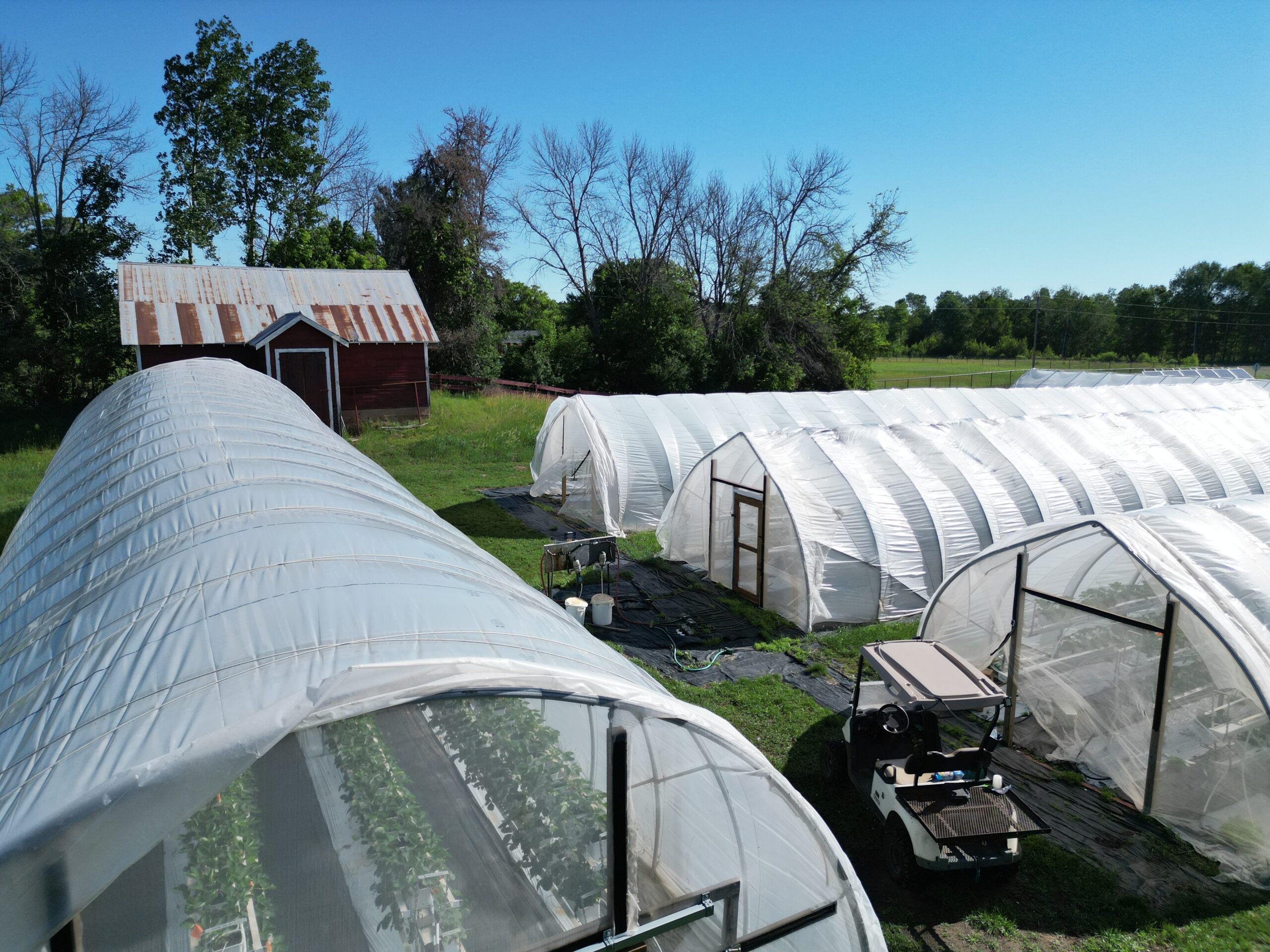
Andy has drawn inspiration for his farming techniques from growers in the Netherlands and Japan. Both countries have limited farmland so they have learned to maximize production in small spaces using hoop houses. The practice is known as controlled environmental agriculture. Hoop houses are long, plastic covered, half cylinder structures that are designed to protect plants from harsh elements, like severe wind and rain. Because berries are a very delicate fruit they are an ideal candidate for this style of cultivation.
Andy was inspired to create his own hoop houses for multiple reasons. Hoop houses protect plants and maximize fruit production. They also significantly reduce the labor and time required for harvesting, while conserving water, and preserving land for native wildlife. Hoop houses also offer the benefits of controlled environment agriculture at a price point that more small farmers can afford.
Andy currently has five hoop houses on his 15 acre property and is in the process of building his sixth. He farms exclusively within these five hoop houses, meaning only 0.18 acres, or about 1.2%, of his 15 acre property is used for farming. In contrast, if he was growing in an open field using conventional farming methods, he would need approximately 3 acres to grow the same amount of fruit.
The rest of his property is native habitat, reflecting Andy’s commitment to environmental stewardship. Prioritizing this native habitat provides significant ecological benefits, including improved soil health and an essential habitat for pollinators and native wildlife.
Hoop houses also allow Andy to take sustainability a step further by consuming far less water than an average field farm. He created a drip irrigation system set up on a timer that runs for about 20 minutes a day, twice a day. His watering system is also diluted with just the right amount of fertilizer to keep his plants healthy and strong, in the farming industry this practice is called fertigation.
Hoop House Harvesting Benefits
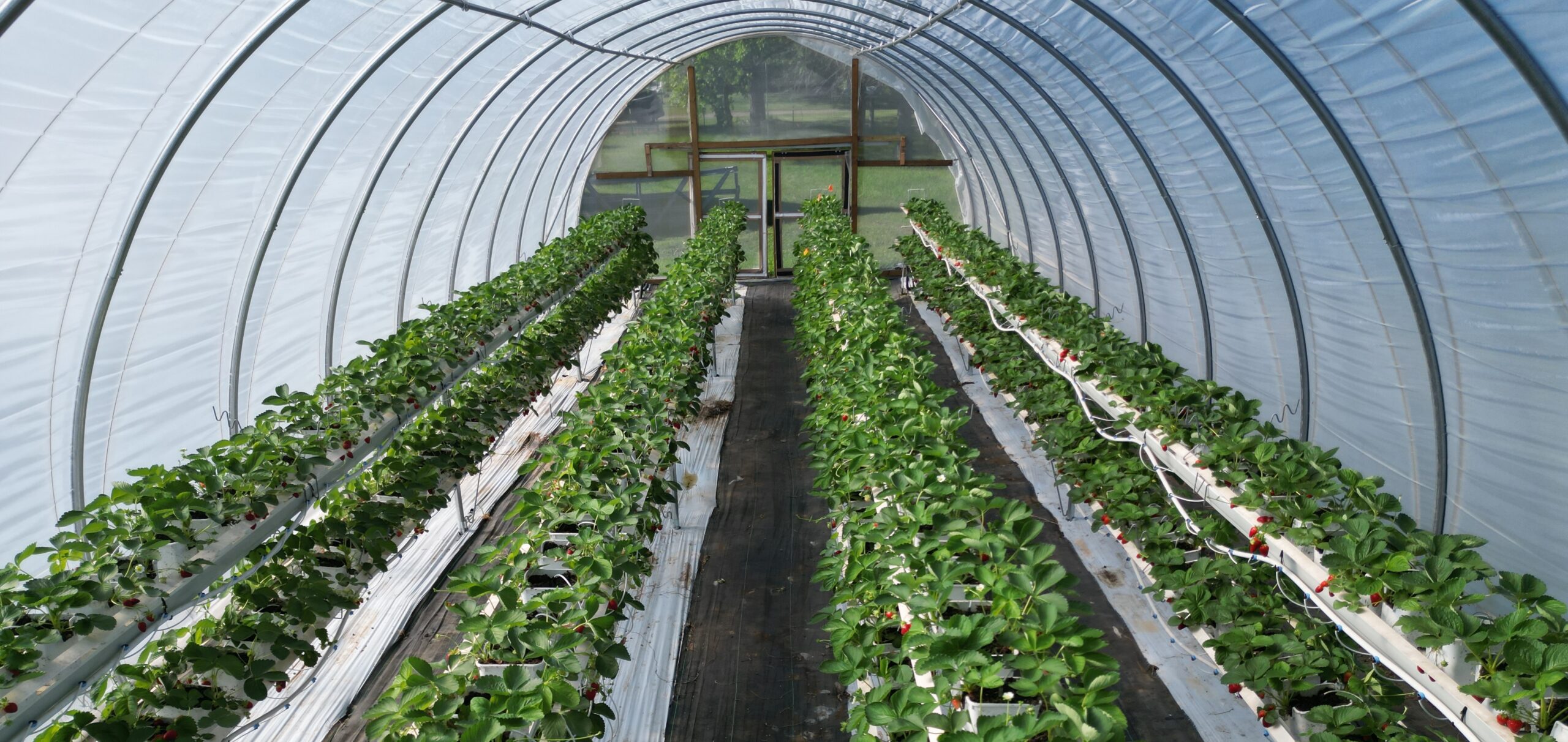
Another benefit of hoop houses is the ease of harvesting. Andy’s strawberry plants are on elevated gutters in his hoop house. This simple innovation puts less strain on his harvesters and decreases the amount of time it takes to harvest his produce. There is less weeding, plants are grown closer together and sit at eye level instead of foot level so picking is faster. He has eliminated the need for complex and expensive equipment or for a harvester to be exposed for hours in the hot sun.
To prove the benefits of harvesting inside hoop houses, Andy ran a 3 year labor analysis to compare the differences between harvesting in a hoop house and harvesting on an open field. He wanted to quantify the labor savings compared to traditional field farming. Andy tracked when he and his harvesters began harvesting and when they ended harvesting down to the minute and how many pounds of fruit were harvested.
The yield for open field harvesting is approximately 1lb. of fruit for every 15 minutes while the yield for his hoop houses was approximately 4lbs. for every 15 minutes, a savings of approximately 75%. With a more efficient farm, Andy will hire fewer workers, provide better working conditions, and reduce harvesting time during peak season. From a business perspective this reduces labor costs, and from a personal standpoint it aligns with his commitment to better farming practices.
Andy’s Pesticide Studies
Currently, pesticides are used in the overwhelming majority of farming operations. Many pesticides can be harmful for human consumption, but without them plants would suffer greatly from destructive pests and crop yields would fall.
Andy has received a grant to conduct research on the effectiveness of different pest control strategies in his hoop houses. One of these methods is biocontrol, the practice of releasing beneficial insects that target harmful pests but don’t negatively affect plant production. Andy believes biocontrol offers serious promise for future farming.
Andy is starting to diversify his farm operation by experimenting with growing blueberries and raspberries. There is very little research on growing these fruits, specifically blueberries, in controlled spaces like hoop houses.
To Andy the potential benefits are obvious, blueberries and raspberries have been suffering nationwide due to a new invasive insect called the Spotted Wing Drosophila. These pests dig their way into berries and lay eggs. When their larvae hatch they destroy the fruit from the inside out.
Currently the only way to control these insects are pesticides. Andy believes growing blueberries and raspberries in a more controlled environment, like hoop houses, can decrease the damage these bugs can inflict while also expanding the available research into best growing practices for these fruits. It’s safe to say Andy’s path to becoming a professor may have changed, but his love for research certainly didn’t!
Climate Change & Berry Production
Climate change has been in the forefront of agriculture for a long time. Open field farming is highly dependent on the year’s climate predictions. In the past decade we have seen increasingly divergent weather patterns and they continue to trend toward the extremes.
Extreme weather conditions are especially damaging to berry farming due to the fact that berries are a very soft fruit and extremely influenced by climate.
In the Minnesota area, and across the country, we have been seeing strawberry farms failing due, in large part, to drastic swings in climate conditions that inevitably affect berry growth and crop yields. Andy believes that hoop houses or controlled environmental agriculture can be the future for berry farming in America. Growing this way reduces the impacts of harmful weather on these soft, vulnerable fruits.
A Look Into Twin Cities Berry Co.’s Future
Looking forward, Andy has big goals for growing Twin Cities Berry Company. He plans to expand with a commercial kitchen and start producing more berry related products like jam and fruit leather to be sold on a larger scale. But he never wants to stray from being a sustainable farm, so selling wholesale or in large retail outlets is not his objective. He wants to keep his produce local in co-ops, restaurants, and other venues.
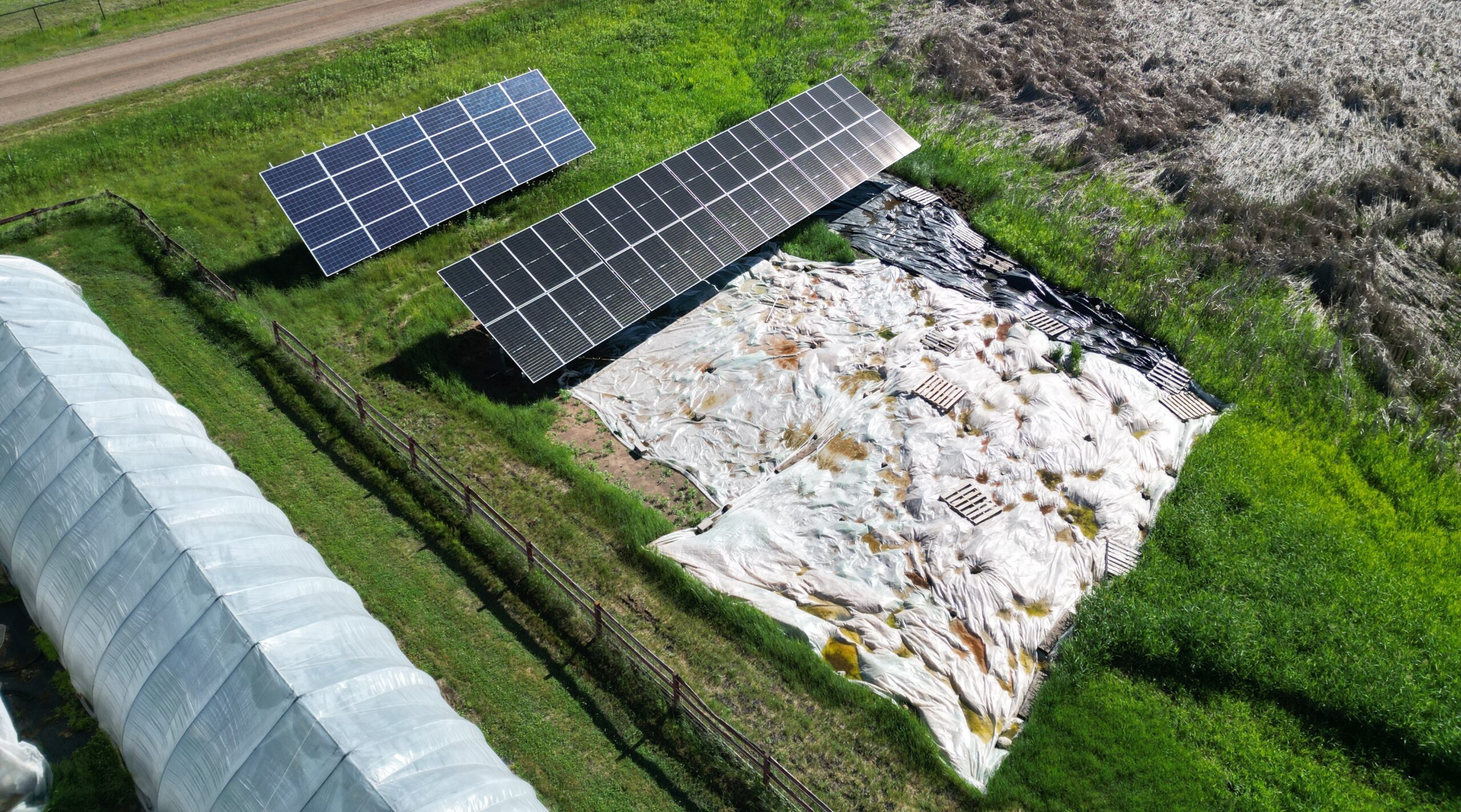
As Andy expands, solar energy will play a critical role. Running any business can be costly, so knowing when and where to save money can create business opportunities down the line. Andy is leveraging solar to reduce his operating expenses while also aligning with his overall sustainability objectives for the farm. When Andy bought his farm there was 7 kW of ground mounted solar already installed on the property. He then added 20 additional kiloWatts to this system. Adding this allowed him to power all of his business operations, including his electric work truck on solar energy. By investing in solar early he will avoid tens of thousands in energy costs over time. As energy costs climb 3-5% annually over the next 25 years, Andy’s energy costs are locked in at today’s rates. He expects to save approximately $85,493 over the life of his new system.
Andy is also taking his solar investment a step further. He is transforming the land around his solar array into a native plant sanctuary. Using soil solarization, a pesticide free method of killing existing non-native plant species, he will clear the existing area. Once clear, the land around the array will be planted with a mix of native grasses and flowers. The practice of merging solar with native wildlife is known as agrivoltaics, and is growing across the world. The process of converting farm land back into native prairie is called great land stewardship!
Andy’s Educational Objective
Andy’s current focus is running a sustainable and profitable farm but he has never lost the desire to acquire and share knowledge. He is applying for educational grants to create a professional grade video series focussed on controlled environmental agriculture practices. His goal is to share the knowledge and experience gained at Twin Cities Berry Company with current and future farmers across the country.
Through this series he will explain how to design and build his innovative hoop houses including his techniques for watering, fertilization, pest control and harvesting. By sharing his accumulated knowledge in a free and easy to understand format Andy hopes to accelerate the growth of controlled environmental agriculture practices.
Securing grant funding for this educational endeavor will not be easy as many grant boards tend to favour research projects over educational programs. Andy also appreciates the value of research but he firmly believes that once research has clearly shown the path forward, education is critical to driving change at scale and realizing the beneficial outcomes proven through the research.
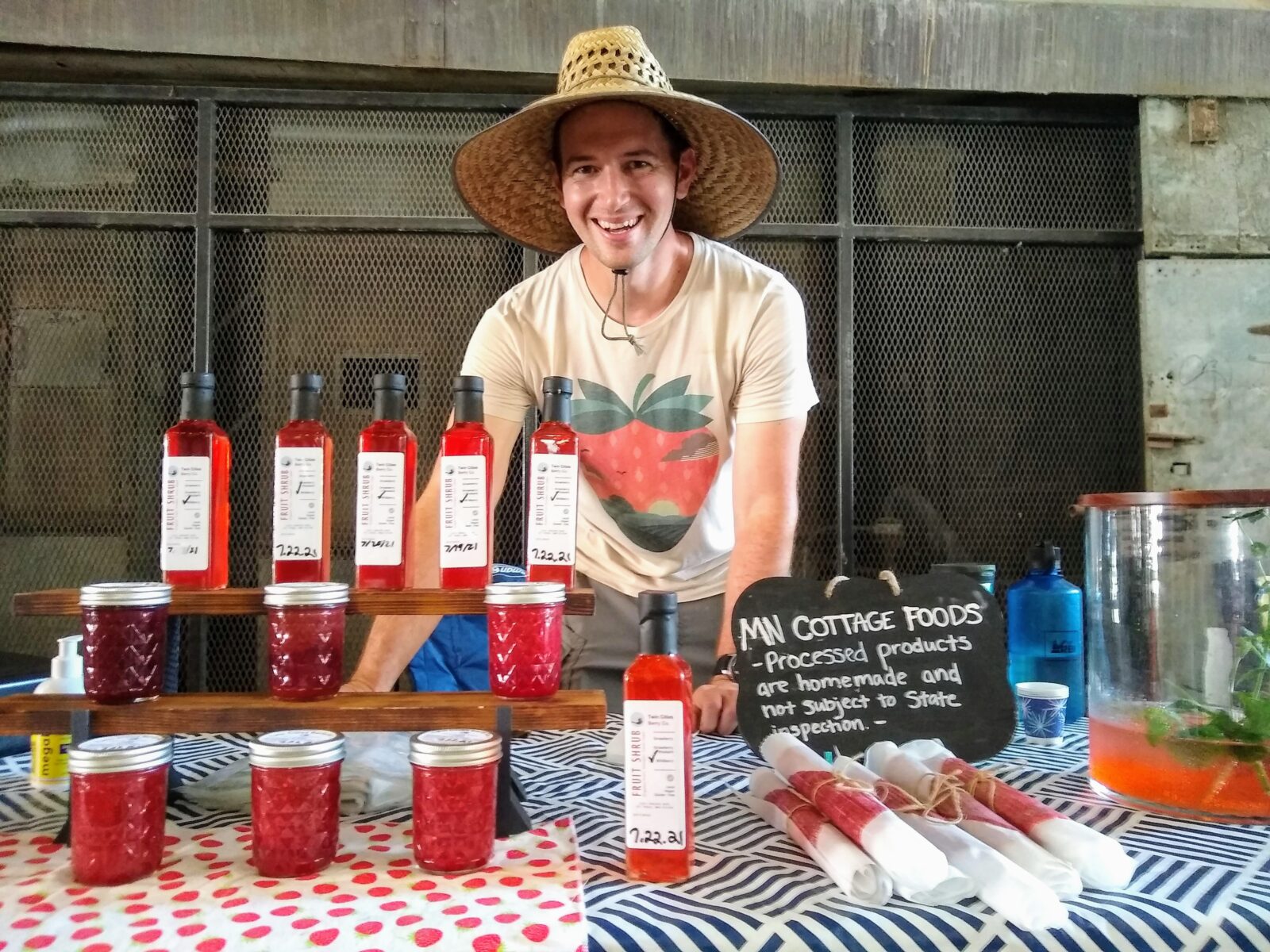
Where You Can Find Twin Cities Berry Company
You can find Twin Cities Berry Company at Mill City farmers market every Saturday starting June 13, and at lower town St.Pauls Farmers Market.
They will be selling fresh strawberries, strawberry jam, syrup, fruit leather and strawberry shrub drink mixer!