
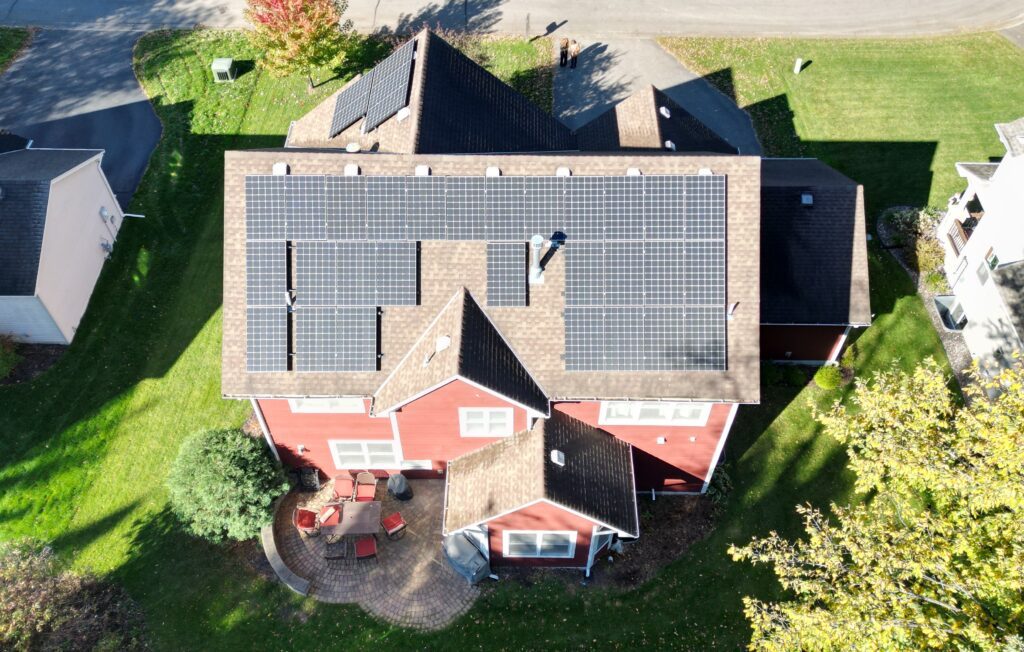
Most homeowners who end up going solar didn’t wake up one day and just decide. They spent months, sometimes longer, weighing the pros and cons. We created a checklist that is designed to help you think through this decision honestly.
Some items are straightforward, others require a little more digging. But by the time you’ve worked through all of them, you’ll have a much clearer picture of whether solar makes sense for you and your home.
Your Roof: Start Here Before Anything Else
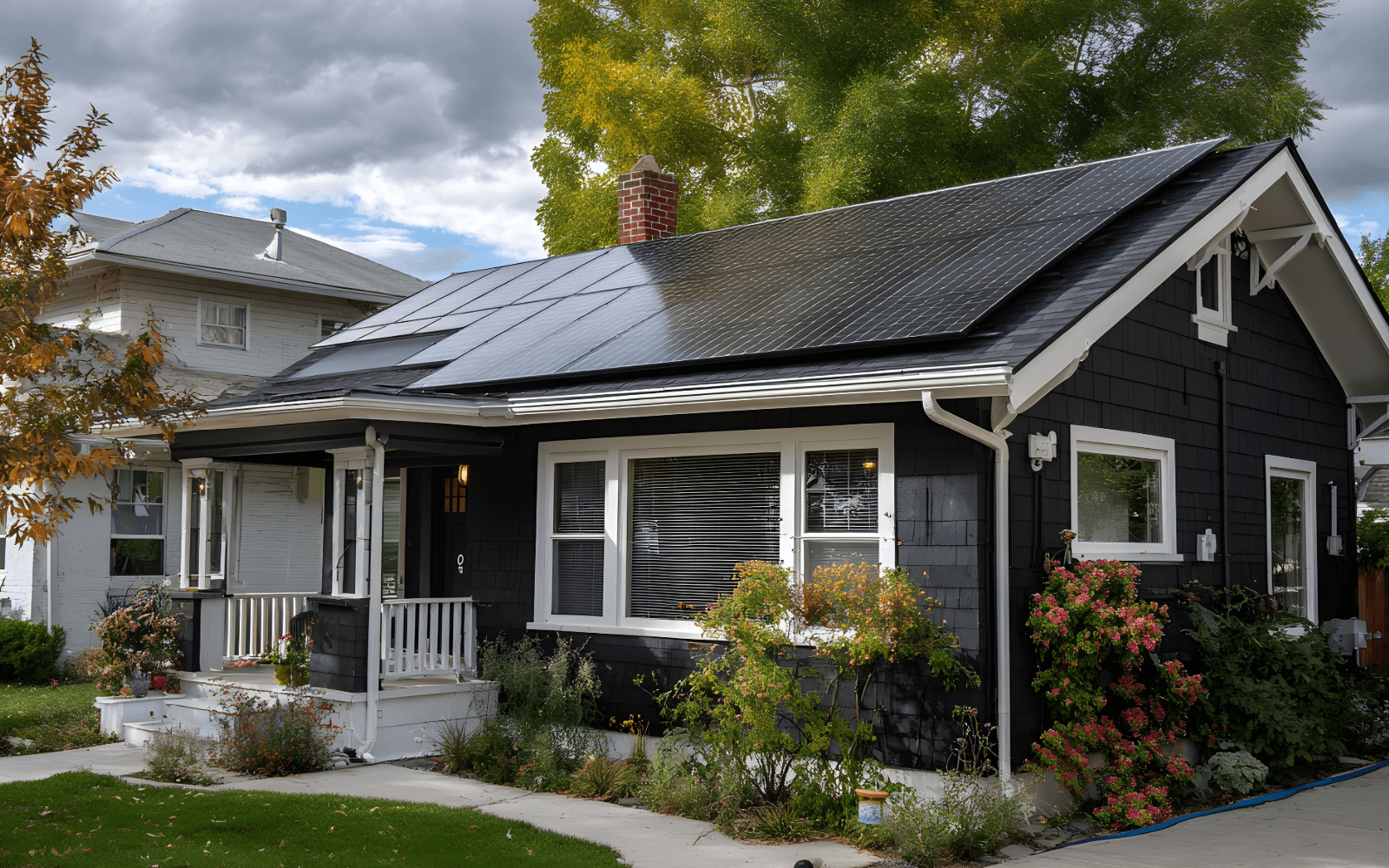
Solar panels have a lifespan of 25 years or more. Your roof needs to be able to support them for most of that time. If your roof is more than 15 years old or showing signs of wear, replacing it before installing solar is worth factoring into the cost conversation.
Adding panels to a roof that needs replacement in five years means paying to remove and reinstall the system, which adds cost that most homeowners don’t anticipate.
Beyond roof age, orientation and pitch, having a portion of your roof be south-facing will produce the most solar energy in Minnesota. Southwest and southeast facing roofs are also workable.
North facing roof space is generally not useful for solar production in this climate. A significant amount of shading from trees, chimneys, or neighboring structures during peak daylight hours can reduce production and may affect whether the system size needed to meet your goals is even physically possible on your roof.
Ask yourself:
- Is my roof less than 15 years old, or recently replaced?
- Does my home have south, southwest, or southeast facing roof sections?
- Is that roof space reasonably free of shade during most of the day?
If the answer to all three is yes, your roof is likely a good candidate. If one or more is a no, that doesn’t automatically rule out solar, but it does change the conversation about system design and financial return, so it’s best to talk to a professional about what you can reasonably expect.
See if You’re a Good Fit for Solar
Your Electric Bill: Is There Enough to Offset?
Solar makes the most financial sense when it’s replacing a meaningful amount of grid electricity. A home with a very low electric bill, say under $100 a month on average, will have a longer payback period and a smaller return on the investment than a home spending $150 to $250 or more each month.
In Minnesota, electric bills tend to be lower in the transition months and higher in summer and winter due to cooling and heating loads. The annual total is the more useful number.
If your household uses 8,000 to 15,000 kilowatt-hours per year, you’re in a range where a solar system can offset a significant portion of that and produce real financial results over time.
Pull your last 12 months of utility bills and add up the total kilowatt-hours used. That number is the foundation for any honest solar sizing conversation.
Ask yourself:
- Is my average monthly electric bill $100 or more?
- Does my annual usage give a solar system something meaningful to offset?
If yes, the financial case has a foundation to stand on. If your bill is very low, solar may still make sense eventually, particularly if you’re planning to add any appliances that rely heavily on electricity, like an electric vehicle or switch from gas heat to a heat pump, both of which would increase your electric load substantially.

Your Financial Situation: Payback, Incentives, and Timing
Solar is a capital investment. The systems that perform best financially are owned outright or financed at a rate low enough that the monthly payment is less than the monthly bill savings from day one. That math is achievable for many households right now, but it requires honest numbers rather than optimistic projections.
There can be added incentives like Minnesota’s Xcel Energy Solar Rewards program which gives you $0.03 per kWh that your system produces for the first 10 years of your system’s life. That program runs on a first come basis and has annual funding limits, so timing matters. Other utilities in the metro have their own incentive structures worth understanding before signing anything.
Ask yourself:
- Am I in a financial position to own the system, or to finance it at a favorable rate?
- Have I looked at what incentives my specific utility offers?
If you can answer yes to these the financial picture is likely favorable. If any of these are uncertain, an energy assessment is the right place to work through the specifics before committing.
Your Plans for the Home: How Long Are You Staying?
Solar payback periods in Minnesota typically run between 10 and 13 years depending on system size, usage, incentives, and utility rates. If you’re planning to sell the home in three years, the financial return on the investment looks different than if you’re staying for 20.
That said, solar does add to home resale value, and studies have consistently shown that solar homes sell faster and at a premium compared to comparable non-solar homes. The premium varies by market. In the Minneapolis–St. Paul area, where energy costs and environmental awareness are both high, the value added tends to be meaningful. Whether that premium fully covers the unrecovered investment at the time of sale depends on the system cost, the age of the system, and the local market at the time.
Ask yourself:
- Are you planning to stay in this home for at least 10 to 13 years?
- If you might sell sooner, have you looked at how solar affects resale value in your specific neighborhood?
If you’re staying long term, solar is a straightforward investment to evaluate. If you’re not sure, it’s still worth understanding but warrants a more careful look at the numbers before deciding.
Your Bigger Energy Picture: Is Solar the Right First Step?
This is the question most solar checklists skip, and it’s often the most important one. Solar works best when it’s part of a broader energy plan rather than a standalone add on to a home that hasn’t been optimized.
A house with significant insulation gaps, an aging HVAC system, or an electrical panel that can’t support new loads is not in the best position to maximize the return on a solar investment. Addressing those things first, or at least understanding them, changes what system size makes sense and what the actual savings will look like.
Similarly, if an EV purchase or a switch from gas to electric heating is on the horizon, sizing a solar system without accounting for that additional loads means potentially undersizing the system and leaving savings on the table.
Ask yourself:
- Is my home reasonably energy efficient, or are there obvious improvements that should come first?
- Are there planned changes to my energy use, like an EV or a heat pump, that should factor into the system size?
- Do I have a clear picture of my home’s full energy situation, or am I working from assumptions?
If you’re not sure, that’s exactly what a home energy assessment is designed to clarify. It looks at the whole picture before making any recommendation, which tends to produce better outcomes than starting with a solar quote and working backward.
What to Do With Your Answers
If you worked through this checklist and most of your answers were yes, your home is likely a strong candidate for solar and the timing is worth exploring seriously. If several answers were no or uncertain, that doesn’t mean solar isn’t in your future. It means there’s some groundwork to lay first, and knowing that now saves you from making a decision that doesn’t perform the way you expected.
The residential solar page is a good next read if you want an overview of solar for everyday homes and what that looks like. The Minnesota solar FAQ covers the questions homeowners ask most often. And the solar incentives page breaks down the current programs worth knowing about before you make any decisions.
Powerfully Green Solar helps homeowners across the Minneapolis–St. Paul and surrounding areas take control of their energy use through smarter systems, not just solar alone. If you’ve worked through this checklist and want a professional set of eyes on your specific situation, schedule a free energy assessment and we’ll give you a straight answer.